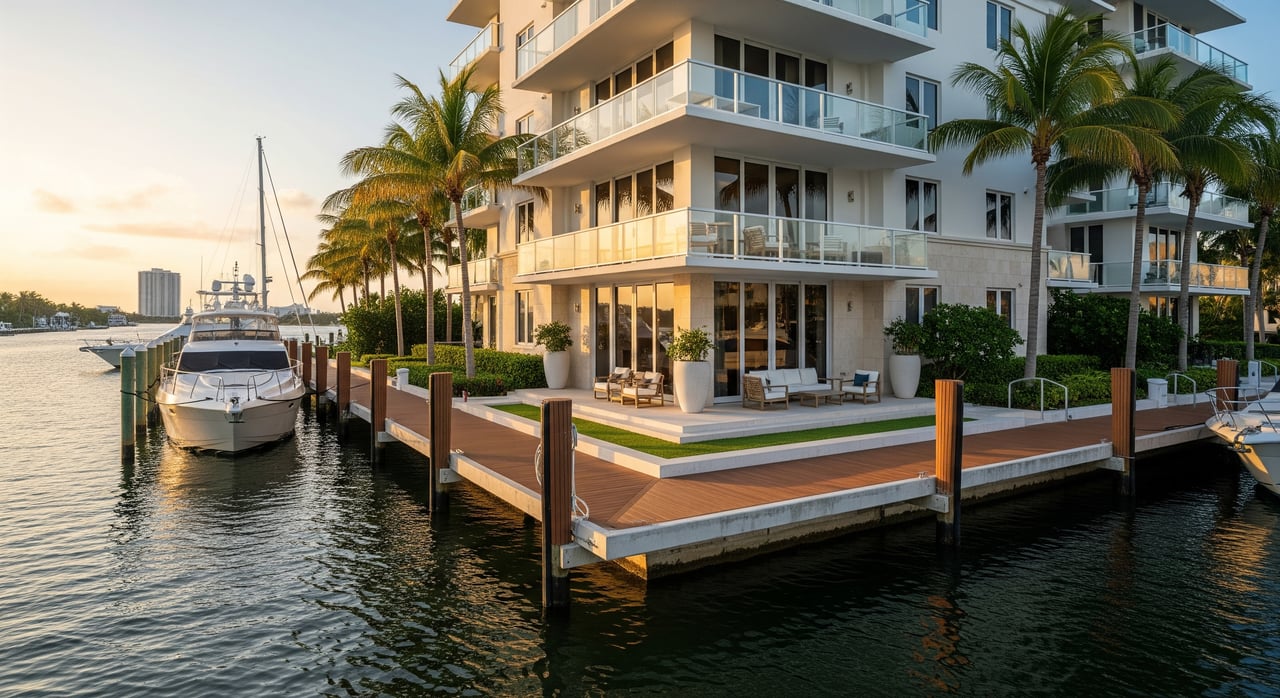
Marina Condos in West Palm Beach: Slip Buyer Guide
November 27, 2025
November 27, 2025
Imagine stepping from your condo elevator onto the dock and casting off within minutes. If that is your goal in West Palm Beach, the details behind marina condos matter more than the view. Slip ownership, fees, rules, and hurricane plans can vary widely from property to property. In this guide, you will learn how slip rights work, what costs to expect, what to verify locally, and how to avoid common pitfalls when you buy.
Let’s dive in.
A marina condominium is a waterfront condo where boat slips are part of the property or offered through an affiliated marina. The fine print determines how you can use and transfer a slip. In Florida, the recorded condominium declaration, plats, and bylaws control the exact rights.
At a high level, you will see four common models in West Palm Beach:
Florida’s condominium rules sit under the Florida Condominium Act, which outlines how associations operate and how limited common elements are handled. For statutory context, review the text of Chapter 718, Florida Statutes. Your specific rights come from the recorded declaration, deeds, and any amendments for the building you choose.
When a slip is deeded or assigned as a limited common element to a unit, it is typically treated as real property and may be taxed. Confirm how the county assesses the slip by checking the Palm Beach County Property Appraiser. Title should show whether the slip can be sold separately or must transfer with the unit. The declaration will also spell out cost-sharing for dock maintenance, dredging, and seawalls.
Insurance is a two-part conversation. Associations often insure common dock structures, but coverage varies. You will be responsible for your vessel’s hull and liability coverage, usually with specific limits and additional insured language noted in the rules.
Lease-only arrangements can offer flexibility, but the lease controls your security. Terms may be month-to-month or multi‑year and can set renewal rights, rent escalations, and termination conditions. Lease rights typically do not transfer automatically when you sell a unit, so ask early if a buyer can assume your lease.
Expect separate dockage charges, plus metered utilities. Property taxes on the slip usually do not apply to lessees, but you will want to confirm all fees and any special assessments tied to dock projects.
Some buildings or nearby marinas offer dockage through a membership. You might pay an initiation fee, annual dues, and variable dockage based on length overall and services used. Memberships can grant priority access and service benefits. Resale rules for memberships vary, so ask how transfer works and if pricing is capped or market-driven.
Budget for more than a unit’s list price. You will likely encounter some mix of the following costs:
Some associations fund docks and dredging through reserves. Others rely on special assessments when projects arise. Ask to see the budget, reserves, and any planned capital work before you commit.
Marina condos in West Palm Beach and along Lake Worth Lagoon commonly offer a mix of:
Not every property offers every service. Confirm exactly what is included and where third-party providers fill the gaps.
Slip size, channel depth at mean low water, and bridge clearances control what you can berth. West Palm Beach slips tie into the Intracoastal Waterway and Lake Worth Lagoon with ocean access through the Lake Worth Inlet. Ask for measured slip dimensions, usable depth at low tide, and the marina’s dredging history.
For navigation and depth references, review NOAA nautical charts and monitor the U.S. Coast Guard Local Notices to Mariners for updates affecting channels and bridges. For future maintenance work, you can also ask whether permits are in place for dredging or dock replacement and verify permitting with the U.S. Army Corps of Engineers, Jacksonville District and the Florida Department of Environmental Protection.
Many condo associations limit or prohibit liveaboards. Short‑term rentals of units may also be restricted, and some rules limit slip use by tenants or guests. To confirm building-specific rules and any local standards, review the association documents and consult the City of West Palm Beach’s permitting and code resources via the Building Division.
Marinas must follow state and federal rules on fueling, pump‑out, and protection of seagrasses and shoreline areas. Boat owners are further responsible for registration and safety requirements. For a clear overview, see state boating regulations via the Florida Fish and Wildlife Conservation Commission, and ask the association for its specific environmental policies.
Hurricane procedures can make or break your experience as an owner. Most marinas have plans that require owners to remove vessels ahead of storms or to set approved storm lines. Some provide haul-out options or coordinate with nearby yards, while others leave logistics to the owner.
Ask for the written hurricane plan, any penalties for noncompliance, and a record of how the docks performed in past storms. For larger vessels, confirm if haul-out capacity is available nearby and whether you can reserve a spot during the season.
Request these documents in writing before you tour or make an offer:
Use these sources to verify details and title:
Ownership and transfer
Fees and financial exposure
Physical and operational constraints
Rules, insurance, and liabilities
Operations and emergencies
Legal and title matters
Buying a marina condo in West Palm Beach is about aligning lifestyle and logistics. When you confirm the slip’s legal status, understand the financials, and verify the operational details that affect daily use, you can enjoy the convenience you want without unwelcome surprises.
If you value a discreet, concierge process with development-aware insight, partner with a local team that treats the marina as seriously as the residence. With long-standing neighborhood expertise and on-site development experience, The Murray Group can help you evaluate slip rights, review association documents, and coordinate the right professional checks. Schedule a Private Consultation, and let’s map the clearest path to your dock and door.
Stay up to date on the latest real estate trends.

Get assistance in determining current property value, crafting a competitive offer, writing and negotiating a contract, and much more. Contact us today.