First-Time Guide to Buying Waterfront in Harbour Isles
December 11, 2025
December 11, 2025
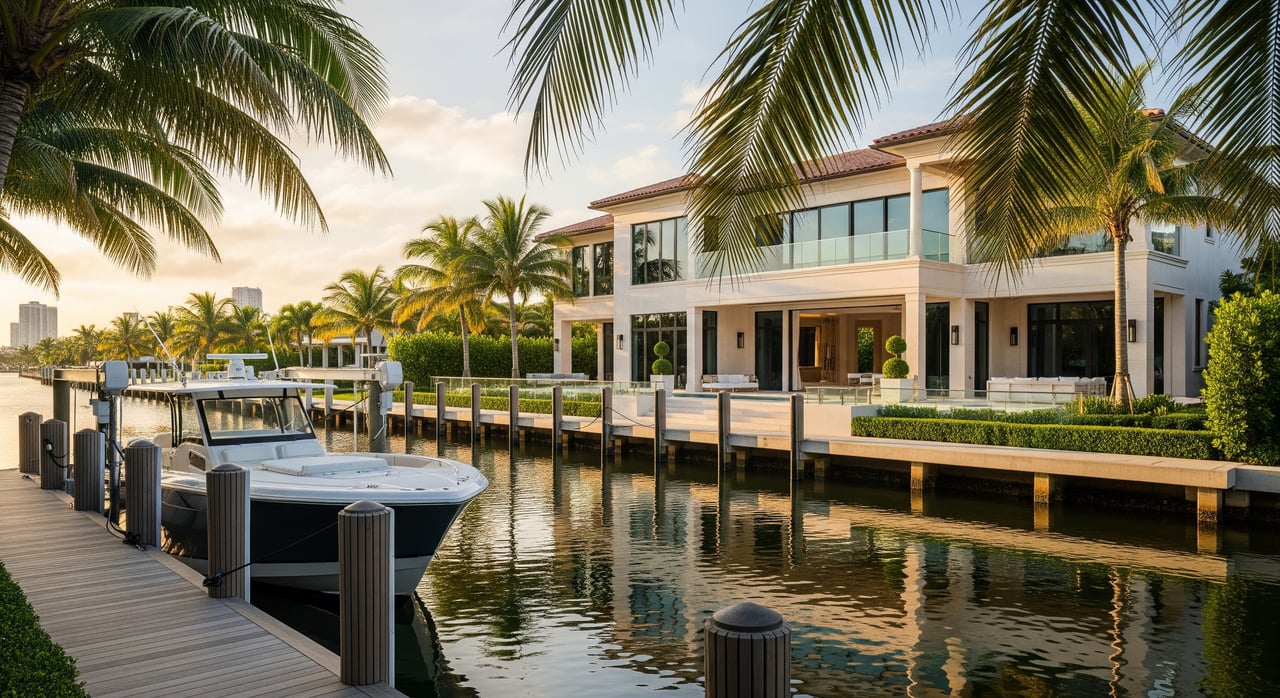
Picture stepping from your backyard onto your boat, coffee in hand, with the Intracoastal Waterway just beyond your dock. If you are eyeing Harbour Isles in the Village of North Palm Beach, you are in the right place. This first-look guide shows you how to assess dockage, ocean access, HOA rules, inspections, and costs so you can buy with confidence. Let’s dive in.
Harbour Isles sits along the Intracoastal Waterway in the Village of North Palm Beach. Many homes have direct ICW frontage or canals that lead to it, which is appealing if you want fast access to open water. You will find a mix of private docks, lifts, and community-managed marine features that can fit a range of vessels.
What makes this neighborhood special for boaters is the combination of location and lifestyle. You can keep your boat close to home and reach the ocean through nearby inlets by running the ICW. The key is to confirm the route, bridge types, and depths that apply to your specific property and vessel.
Harbour Isles properties connect to the ICW in different ways. Some lots face the ICW directly, while others back onto canals. The path you take to the ocean and the bridges you pass under depend on which slip or canal you use and which inlet you choose.
Direct ICW frontage usually means fewer turns to reach the main channel. Canal homes can be just as convenient, but you should confirm channel width, turning radius, and any shoaling at low tide. Ask the seller or association for a simple navigation diagram that shows local markers and any recent dredging.
If you own a tall vessel, confirm there are no low fixed bridges along your path that would limit your air draft. A sailboat or high-profile motor yacht may require a different route or timing with tides.
On this stretch of the ICW, you may encounter a mix of fixed and movable bridges. Fixed bridges list a vertical clearance on official charts. Movable bridges open on demand or on a schedule and are coordinated by bridge operators.
Your boat’s air draft is the headline figure. Always compare your air draft to the posted closed-clearance of each fixed bridge, adjusting for tide height and a safety margin. Local notices may temporarily change clearances or opening schedules, so verify current information before you go.
Tide height changes two critical things. It affects your available bridge clearance and your usable depth along shallow stretches. Even a foot of tide can make a difference for a deeper draft boat.
Shoaling happens when sand and silt move and reduce channel depth. Conditions can change seasonally or after storms. Consult official charts and recent local reports, then confirm what you see with on-the-water checks.
Every waterfront home is different. Focus on the slip dimensions, depth, and condition of marine structures. These details determine what you can safely moor today and what upgrades you might plan for later.
Floating docks handle tidal changes well. Fixed docks are common and sturdy. Lifts or davits can reduce hull wear, marine growth, and storm exposure for many boats.
Request exact slip length and clear width, not just a round number. Confirm water depth at mean low water and, if possible, at the lowest expected tide. Ask for a recent sounding or survey and whether the seller has maintenance records that reference dredging or bottom conditions.
If a lift is present, confirm its rated capacity against your vessel’s true weight, including fuel, gear, water, and tender. Check power and water pedestals for proper service and safe wiring.
Seawalls or bulkheads protect your yard and support the dock system. Inspect the cap, tiebacks, pilings, and any signs of settlement. The age and type of wall can influence future costs and insurance. For lifts, have a qualified marine contractor assess motors, gears, cables, bunks, and control systems.
Docks, boat lifts, and seawalls on tidal waters typically require permits at the county and state level and may involve federal coordination. Permits address navigation safety, shoreline protection, and impacts on sensitive habitats like seagrass. Verify that existing structures were permitted and that there are no open violations or unpermitted additions.
Manatee and seagrass protection rules guide how and where pilings and anchors may be placed. If you plan upgrades, factor in review timelines and compliance steps.
Association rules can affect boat size, slip use, and transfer rights when you buy. Because policies can vary by community and change over time, do not assume what applies in one neighborhood applies in Harbour Isles.
Request the full association document set before you commit. That includes CC&Rs, Rules and Regulations, ARC standards, dock assignment maps, meeting minutes, financials, reserve studies, and any slip or boat registration forms. Ask for the hurricane plan and the insurance requirements specific to boat owners.
Key items to clarify include whether slips are owned, assigned, or leased, how they transfer with a sale, any size or draft limits, guest and rental policies, utility metering, and whether liveaboards are permitted. Confirm who maintains seawalls and docks and how reserves or special assessments cover marine infrastructure.
For a waterfront purchase, add marine-focused due diligence to your usual home inspections. Schedule a marine contractor to inspect the dock, lift, pilings, electrical, and seawall. Ask for a property survey that shows the seawall line, distance to mean high water, and any encroachments.
If you plan to keep a larger boat, get a written evaluation of lift capacity and structural condition. Request permit history from county records to confirm the dock and lift were built and modified with approvals. If there are seagrass beds near the property, understand how they could affect future changes.
Many coastal properties fall within flood zones that can influence building requirements and insurance premiums. Look for elevation details, flood vents, and other mitigation features on the home. Windstorm coverage, deductibles, and insurer requirements in coastal Florida can be meaningful planning items.
Repairs or additions to docks and seawalls often need permits and may trigger updates to current code. Build potential timelines for approvals into your project and closing plans.
It is wise to budget for both routine and periodic marine expenses. Examples include:
Ask the seller or association for recent invoices, reserve studies, and any planned projects. A clear record of upkeep reduces surprises.
Before you rely on any single source, cross-check information from multiple places. Review official charts for vertical clearances and channel depths along your planned path. Look up any temporary navigation changes or bridge schedule updates that could affect timing.
Local operators and marinas are helpful for recent conditions. Combine their input with your own measurements, especially for air draft and your lowest expected clearance. Always allow a safety margin for tides and weather.
You deserve a streamlined experience that respects your time and standards. The Murray Group pairs neighborhood expertise with development-level insight so you can evaluate waterfront properties with clarity. We coordinate the right inspections, gather association documents, and help you understand route logistics, permit histories, and insurance considerations.
Our team also curates on- and off-market options suited to boat owners, including marina-focused residences and new construction. If you are relocating or buying a second home, we bring a concierge approach that keeps the process organized and discreet.
If you want a waterfront lifestyle in North Palm Beach with practical ocean access, a thoughtful plan will get you there. Start with the dock, seawall, depth, and route. Then pair a thorough document review with targeted inspections. With the right guidance, you can move from first look to first launch with confidence.
Connect with The Murray Group to schedule a private consultation and start your Harbour Isles search with a trusted, local team.
Stay up to date on the latest real estate trends.
Get assistance in determining current property value, crafting a competitive offer, writing and negotiating a contract, and much more. Contact us today.