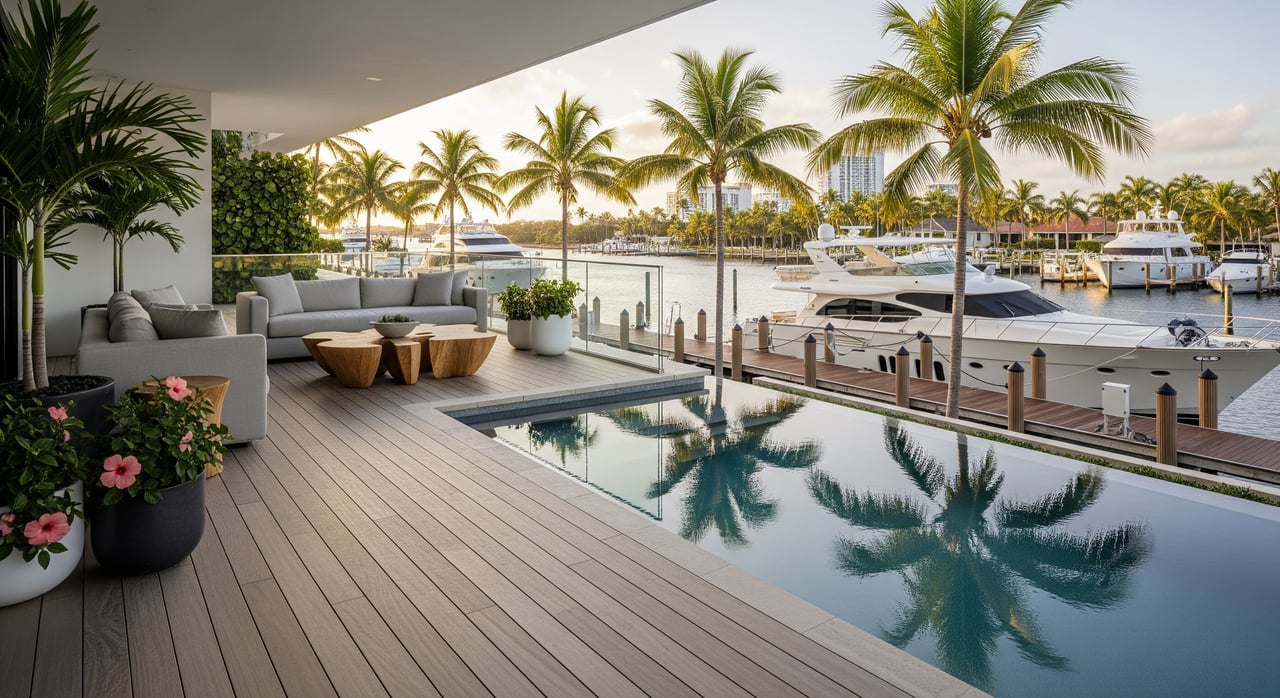
Buyer’s Guide to West Palm Beach Marina Condos
January 15, 2026
January 15, 2026
You want a condo where you can step outside, cast off, and be on the water in minutes. In West Palm Beach, that lifestyle is possible if you match the right building to your boat and your routine. The challenge is making sense of slip options, waterway limits, HOA rules, and costs before you buy. This guide gives you a clear path to evaluate marina-access condos, compare slip arrangements, and shortlist communities that fit your vessel and your life. Let’s dive in.
West Palm Beach sits on the Lake Worth Lagoon along the Intracoastal Waterway, with quick ocean access through the Lake Worth Inlet. You will find protected canals on Palm Beach island, urban waterfront near downtown, and ocean-facing marinas near Riviera Beach and Singer Island. Each area has its own vibe and navigation profile.
If you enjoy walkable dining and quick day runs, downtown and nearby island locations put you close to restaurants and the ICW. If you run a larger sportfish or motor yacht, Riviera Beach and Singer Island often provide deeper water and full-service marinas. South toward Boca Raton and Delray Beach, you will see a wider marina network with service yards and varied slip sizes.
For navigation planning and channel depths, consult the NOAA Chart Locator. For local rules and safe operation, review the Florida FWC boating regulations.
Not all marina access is the same. Understanding how a slip is owned or assigned is critical for long-term certainty and resale.
A deeded slip is recorded with your condo unit or as a separate parcel. It usually conveys at sale. You get the strongest long-term docking rights, which can help resale. Deeded slips are scarce and may carry separate taxes or assessments for dock upkeep.
The association assigns slips rather than deeding them to units. Policies can allow reassignments for maintenance or after a sale. Fees and waitlists vary. You must read the assignment rules to confirm whether a slip is guaranteed to your unit and what happens at resale.
A dock club provides access to a shared pool of slips, often across several buildings. You may get priority or first-come access, but it is not guaranteed. Membership transfer rules, fees, and waitlists differ by club. If you need a permanent home berth, review these terms closely.
Some condos sit next to a marina that leases slips to owners. You benefit from professional management and services, but the slip is subject to the marina’s lease, availability, and approval. Leases can be annual or multi-year and may not transfer with a unit.
Smaller boats can be kept in a rack system launched by hoist. This is convenient for seasonal owners and limits storm exposure. Size and weight limits apply, and popular facilities can have waitlists.
For governance and transfer details, review condo declarations under the Florida Condominium Act, Chapter 718. When in doubt, consult the recorded plats and request a title check to verify any deeded slip.
Matching your boat to the slip and the route to open water prevents costly surprises.
Do not rely on advertised length alone. Confirm usable length, beam, and piling or finger-pier positions with the dock master or HOA. Ask for depth at mean low water both at the slip and along the approach channel. Depths can change with shoaling and dredging cycles, so verify against NOAA charts and recent local records.
If your route includes fixed or bascule bridges, confirm vertical clearance at mean high water and opening schedules. Air draft matters for sailboats and taller sportfish. Build travel time around no-wake zones.
Estimate typical time from the slip to the Lake Worth Inlet and the open ocean. If offshore trips are a priority, you may prefer Riviera Beach or Singer Island. If local ICW cruising and dining are your focus, downtown and island canals may fit better.
Daily convenience and long-term care depend on the support network around your slip.
Map the nearest fuel dock and sewage pump-out. Confirm shore power voltage and amp service at the berth and whether adapters are needed. If you plan overnight trips, ask about guest dock policies for visiting friends.
Larger or high-value vessels often need nearby repair yards and a matching travel lift capacity. Review marina manager availability and after-hours security. For practical marina selection tips, see BoatUS guidance on choosing a marina.
Storm planning is part of coastal ownership.
Ask for the HOA or marina hurricane plan. Some require owners to haul out or follow specific mooring procedures at owners’ expense. Understand how the plan will work for your boat’s size.
Many associations require proof of hull and liability coverage and may ask to be named as an additional insured. Confirm coverage limits and any deadlines in the master policy and dock rules. For storm planning best practices, review the BoatUS Hurricane Resource Center.
Some associations and municipalities limit or prohibit liveaboards. Expect pump-out compliance and rules for fuel handling. Confirm local policies with the HOA and reference FWC boating regulations.
The true cost of a marina-access condo includes slip-related expenses.
Dredging is a recurring capital need in shallow areas and canal basins. Ask for the reserve study and recent dredging history, plus any planned work. You can research permits and notices with the U.S. Army Corps of Engineers Jacksonville District and the Florida DEP’s environmental permitting resources.
Clarify whether dock fees are included in HOA dues or billed separately. Ask how fees change at transfer and whether there are assignment or waitlist fees.
Deeded slips can be separately taxed. Associations may levy special assessments for dock repairs, seawall work, or dredging. Review financials and recent meeting minutes for any marina discussions.
Use this step-by-step plan to save time and avoid misfits.
Choosing the right marina-access condo comes down to fit, certainty, and long-term cost. When you align slip ownership type, waterway access, and HOA health with your boating goals, you will enjoy a smoother closing and a better daily experience on the water.
If you want a curated shortlist tailored to your vessel and lifestyle, along with direct coordination with dock masters and HOA managers, connect with The Murray Group. We combine neighborhood expertise with developer-level insight to help you move from discovery to docking with confidence.
Stay up to date on the latest real estate trends.

Get assistance in determining current property value, crafting a competitive offer, writing and negotiating a contract, and much more. Contact us today.